The traditional order of wedding speeches is the father of the bride, the groom, then the best man, with the MC introducing each. Many couples now add the bride, the maid of honour or a parent from each family. Keep to four or five speeches of about five minutes each, and split them between courses.
At a traditional South African wedding, three people speak in a set order: the father of the bride, the groom and the best man. The MC introduces each of them and keeps the evening moving. Today the list is more flexible. Brides speak, mothers speak, both families are represented. The principles are unchanged. Keep the speeches few, short and well placed, and give the MC a clear plan.
This guide covers the order, the timing, what each speaker should say and what a good MC does.
What is the traditional order of wedding speeches?
| Order | Speaker | Main purpose |
|---|---|---|
| 1 | Father of the bride, or a parent or elder | Welcomes guests, speaks about the bride, welcomes the groom into the family |
| 2 | The groom, or the couple | Thanks parents, guests and the bridal party, and speaks about the bride |
| 3 | The best man | Speaks about the groom, entertains and proposes a toast to the couple |
The MC opens the proceedings, introduces each speaker and closes the formalities.
What are the modern variations?
There is no rule that says only men speak or that only one family is heard. Common variations include:
- The bride speaks. Either alone or together with the groom as a joint speech.
- The maid of honour speaks. Often before or after the best man.
- A parent from each family. A welcome from one side and a response from the other.
- Mothers speak. In place of, or as well as, fathers.
- Two brides or two grooms. Each may speak, or one may speak for both, with a parent or friend from each side.
- An elder gives a blessing. In many South African families, an uncle, aunt or grandparent offers words of advice or a prayer.
Choose speakers because they matter to you and can speak warmly, not because tradition requires them.
How many speeches, and how long?
Attention is limited. A good target is:
- Four or five speeches at most
- About five minutes each, which is roughly 600 to 700 spoken words
- No more than 25 to 30 minutes in total
Tell each speaker their time limit when you ask them, and ask them to time themselves aloud. A speech always runs longer on the night because of laughter and applause.
When should speeches happen during the reception?
There are three workable approaches.
| Approach | How it works | Advantage | Drawback |
|---|---|---|---|
| Before dinner | All speeches after the entrance | Speakers can relax and enjoy the meal | Guests are hungry and the kitchen must wait |
| Between courses | Two after the starter, two or three after the main | Short sessions, steady pace | Needs coordination with the kitchen |
| After dinner | All speeches before the cake | Guests are fed and settled | The evening runs late and attention fades |
For most weddings, between courses works best. It suits a plated meal, where each course is served to the whole room at once and there are natural pauses in between. Agree the timing with your venue so that the kitchen knows when to hold and when to serve.
What should each speaker cover?
Father of the bride, or the welcoming parent
- Welcome the guests and thank them for coming, with a mention of those who travelled far.
- Share one or two memories of your daughter.
- Say something sincere about your new son-in-law or daughter-in-law.
- Welcome the other family.
- Offer a few words of advice.
- Propose a toast to the couple.
The groom, or the couple
- Thank the previous speaker.
- Thank both sets of parents.
- Thank the guests, the bridal party and anyone who helped.
- Speak about your partner. This is the heart of the speech.
- Propose a toast, traditionally to the bridesmaids.
The best man or maid of honour
- Introduce yourself and how you know the couple.
- Tell one or two stories that show the person at their best, with humour that everyone in the room can enjoy.
- Say something genuine about the couple together.
- Read any messages from absent friends, briefly.
- Propose a toast to the couple.
A simple structure for any speech
- Open with who you are and a thank you.
- Tell one story, not five.
- Say what you admire about the person or the couple.
- Close with a wish and a toast.
What does a wedding MC do?
The master of ceremonies is the voice of the reception. A good MC is not a comedian. They are organised, clear and warm, and they make the couple look good.
Before the wedding
- Meets or calls the couple to go through the programme
- Checks how to pronounce every name
- Confirms the order of speakers and their time limits
- Speaks to the venue coordinator and the DJ about cues
During the reception
- Welcomes guests and explains practical matters, such as where the bar and bathrooms are and when dinner will be served
- Announces the entrance of the bridal party and the couple
- Introduces grace or a blessing, if there is one
- Introduces each speaker with a sentence or two
- Announces each course, the cake cutting and the first dance
- Keeps an eye on the clock and adjusts quietly if needed
- Opens the dance floor and announces the farewell
What the MC should avoid
- Long jokes or stories of their own
- Embarrassing the couple or any guest
- Drinking heavily before the formalities are over
- Announcing changes that have not been agreed with the couple
Should you hire a professional MC or ask a friend?
Both can work.
- A friend or family member knows you and adds a personal touch. Choose someone confident, punctual and comfortable with a microphone, and give them a written programme.
- A professional MC or a DJ who also acts as MC brings experience and a steady hand, which is helpful at larger weddings.
Whoever it is, they should work closely with the venue coordinator. The MC speaks to the room, and the coordinator speaks to the kitchen and the suppliers.
Practical tips for the venue
The room affects how speeches are heard.
- Sound. Use a microphone, even in a room that seems small. Ask the DJ for a handheld or lapel option.
- Position. Speakers should stand where most guests can see them, with light on their faces.
- Seating. Seat speakers near the front so they are not walking the length of the hall.
- Glasses. Make sure every guest has a drink before a toast is proposed.
- Notes. Cards are easier to handle than loose pages or a phone.
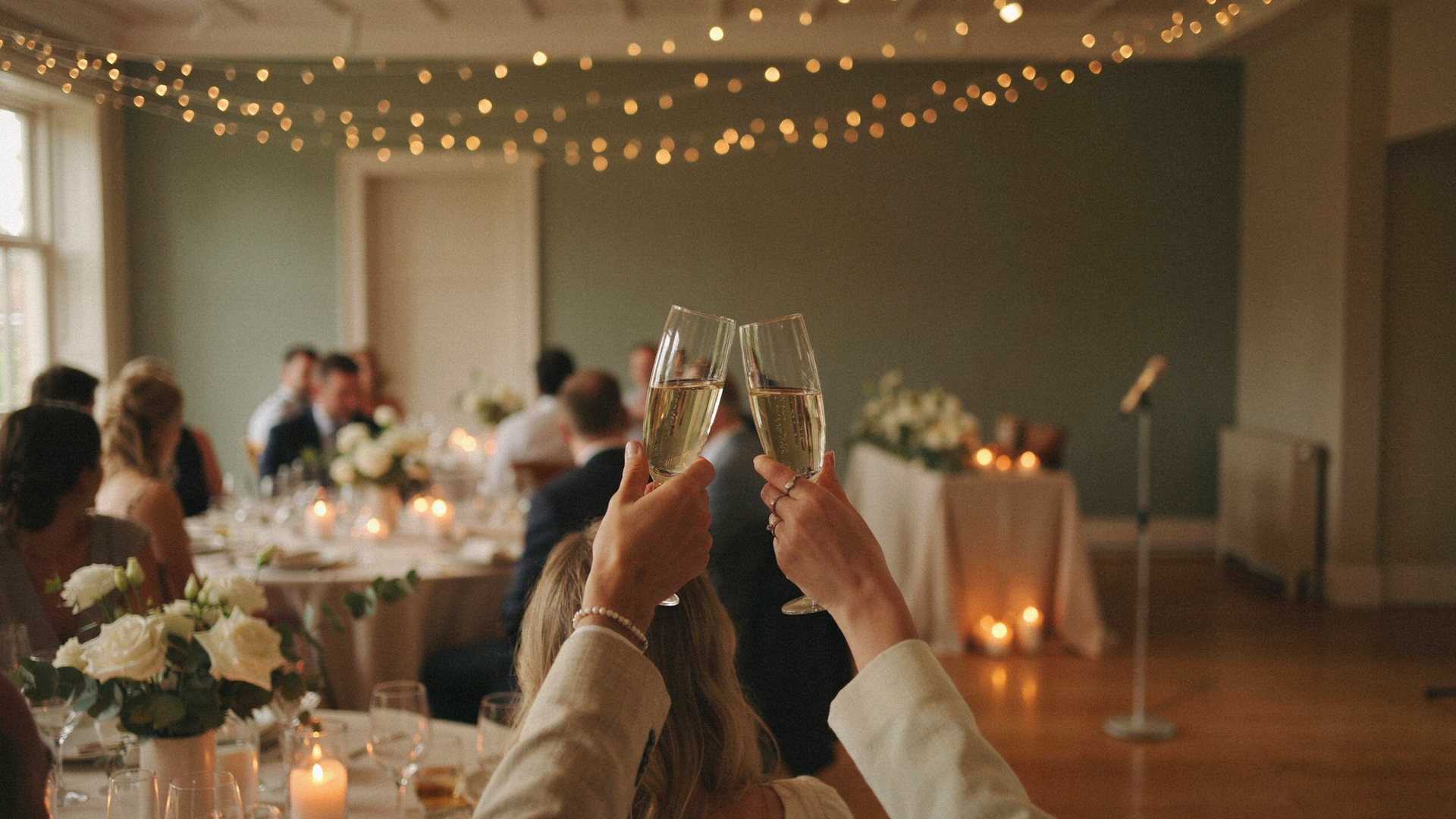
Riverbed Hall at Oxbow Country Estate seats up to 200 guests with a dance floor, and the plated menus give natural breaks for speeches between courses. If you are planning your programme, the weddings page explains how a day at the estate is put together.
A checklist for the couple
- Choose your speakers at least two months ahead
- Tell each one their slot and their time limit
- Decide where speeches fall in the programme
- Brief the MC and share the full programme
- Tell the venue when speeches will happen
- Arrange a microphone
- Have water at the top table
- Plan who will propose each toast
For help fitting speeches into your evening, contact the estate on 013 932 8000.
Frequently asked questions
What is the correct order of speeches at a wedding?
Traditionally the father of the bride speaks first, followed by the groom and then the best man. Many couples now add the bride, the maid of honour or a parent from the other family. The MC introduces each speaker.
How long should a wedding speech be?
About five minutes, or roughly 600 to 700 words. Keep the total for all speeches under 30 minutes so guests stay engaged.
Who gives a speech if the father of the bride is not there?
Anyone close to the bride can take that role. A mother, step-parent, sibling, grandparent, uncle or family friend can welcome guests and speak about her.
Should the bride give a speech?
If she would like to, yes. Many brides now speak, either on their own or in a joint speech with their partner. There is no rule against it.
What does the MC do at a wedding?
The MC welcomes guests, announces the couple's entrance, introduces speakers, announces each part of the programme and keeps the reception running on time, working with the venue coordinator and the DJ.
When should the speeches be at a wedding reception?
Splitting them between courses works well, with two after the starter and the rest after the main course. This keeps each session short and fits neatly with a plated meal.